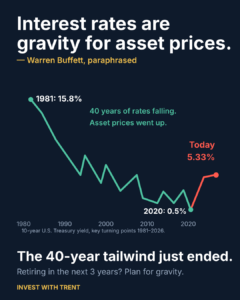
One number can make a mediocre rental property look fantastic:
Appreciation.
I recently modeled a $549,000 rental house in Boise over a 10-year holding period.
I assumed the property appreciated at 3% per year.

After 10 years, it would theoretically be worth approximately $738,000.
That’s nearly $189,000 of appreciation.
Meanwhile, the mortgage balance would fall by more than $52,000.
If I stopped the analysis there, this investment would look pretty good.
But I didn’t.
Because the property was projected to produce negative cash flow.
The initial cash requirement was approximately $177,500.
And over the following 10 years, the model required approximately another $179,000 of owner funding.
That changes the picture considerably.
Once I counted the money going in, the money coming out, and the estimated cost of eventually selling the property, the modeled annualized return was approximately zero.
Slightly negative, actually.
So I ran another scenario.
What if appreciation averaged 5% per year instead?
The modeled annualized return increased to approximately 4.6% before income taxes.
Better.
But I would still have to fund the property while waiting for that appreciation to occur.
Script V1.mdMD
This is why I think rental-property investors need to separate three things:
Cash flow.
Appreciation.
Total return on all capital contributed.
They aren’t interchangeable.
A property can appreciate substantially while producing poor cash flow.
And a large gain in property value does not automatically mean you earned a great return on your money.
That’s especially important as you approach retirement.
During the accumulation phase, you may be perfectly happy sacrificing current income for long-term appreciation.
But eventually the job of your portfolio may change.
And when the objective changes, it makes sense to ask whether the assets you accumulated are still the right assets for the job.