If you’re three years or less from retirement, do you feel as confident about your plan today as you did two years ago?
Today I’m going to talk about a few headwinds I think are keeping investors like you up at night, and then I’ll tell you what I’m doing with my own money.
The 10 year Treasury just passed 5.33%, its biggest quarterly jump since 1994 (the year the Fed doubled rates and Orange County went bankrupt). Mortgages are at 7.4% and oil is at $103.
👉 Warren Buffett says interest rates are to asset prices what gravity is to an apple.
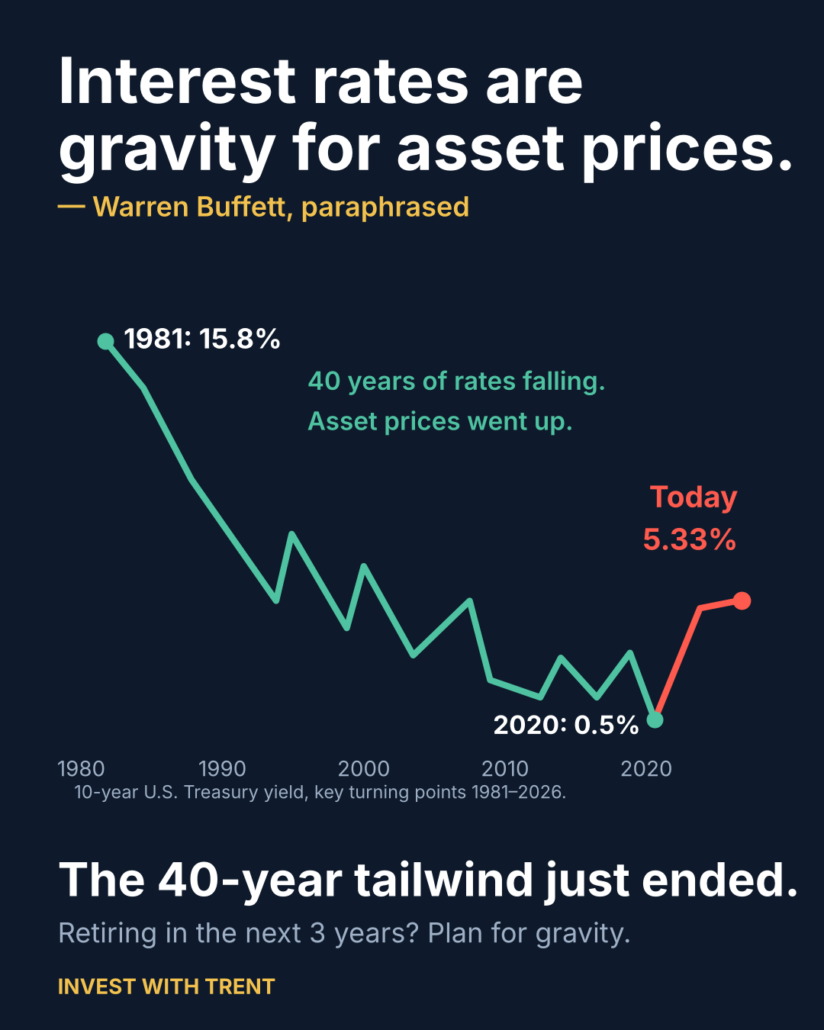
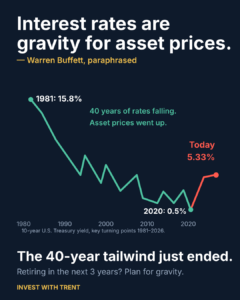
For the last 40 years, gravity worked in our favor. The 10-year went from almost 16% in 1981 to about half a percent in 2020, and that pushed stocks and real estate up for most of our working lives.
⚠️ Can rates fall again? It’s possible, but I wouldn’t bet my retirement on it.
Remember the 70s? If you retired in January 1973, you got hit with an oil embargo, inflation over 12%, and a stock market that dropped 48% in two years. The Dow started the decade around 800 and finished it around 840. That’s ten years of going nowhere while inflation ate your lunch.
When William Bengen came up with the 4% rule, the worst year he found to retire was 1966. Bad years at the start of retirement do damage you can’t undo.
If you’ve got 30 years, you can ride this out. If you’re about to start living off your money, that seems less plausible.
I don’t like the idea of taking a hit at the start of my retirement, so here’s what I’m doing.
I’ve moved a big part of my money into real estate private credit. Instead of owning the building like I used to, I now own the loan to the investor who owns the building.
In other words, I’ve moved up the capital stack and become the bank.
As an equity investor, you get all the upside, but when prices fall, you get hit first. When you’re the bank, you get paid first.
One of the funds I invest in makes short-term loans (2 years or less) to experienced borrowers who’ll pay 2-3% over bank rates to close fast, then refinance with a bank.
Investors get a 9% preferred return, paid monthly, with anything above that paid at year end. Since inception the fund has returned just over 12% net to investors.
And the best part? The average loan-to-value is 45%. Property values would have to fall about 55% before the fund loses a dollar of investor principal.
Could that happen? Sure. Vegas and Phoenix fell more than 50% in 2008, and foreclosures take time and money. Nothing is risk-free, but right now I’d rather be the bank than the owner.
Full disclosure: I run a fund that invests in this fund and earn fees from it. Accredited investors only. Past performance doesn’t guarantee future results.
If you want to learn more, send me a DM.