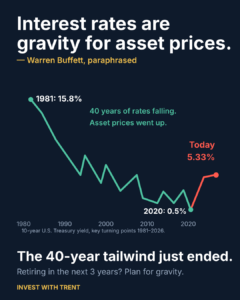
When the Federal Reserve starts cutting interest rates, many passive investors assume private debt yields will automatically plummet in lockstep. But in private credit and commercial real estate bridge lending, that assumption overlooks two critical market realities: contractual interest rate floors and severe structural bank retrenchment.
In this discussion, we dive into how disciplined private credit funds protect investor returns across changing interest rate cycles. We explain how floating-rate debt paired with strict interest rate floors captures upside during rate hikes while locking in a non-negotiable yield floor when rates drop. Furthermore, we explore what happens when loans mature and capital must be redeployed, breaking down why the fallout from the regional banking collapse left a permanent lending void that keeps private credit yields elevated—regardless of Fed rate cuts.
In this video, we cover:
- Floating Rates + Rate Floors: How institutional loan structuring guarantees baseline yield protection when benchmark rates decline.
- The Capital Redeployment Challenge: How fund managers maintain target returns when capital is recycled into new originations during rate cuts.
- The Regional Banking Void: Why the collapse of major regional banks permanently tightened commercial real estate liquidity.
- The “Next-Best Bid” Dynamic: Why borrowers continue paying 9%–10%+ yields when traditional hard money alternatives demand 300–400 bps more.
- “Higher for Longer” in Private Debt: The fundamental economic reasons alternative lending yields remain decoupled from Fed rate cuts.