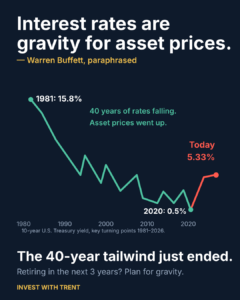
Many passive investors flock to single-family fix-and-flip debt funds lured by promised “high-teen” returns and monthly cash distributions. But here is the hard truth: in a high-interest-rate environment, the foundation beneath these funds is often built on quicksand. When mortgage rates spike and homebuyer affordability dries up, the single binary exit these strategies rely on disappears—leaving fund managers stuck holding underwater assets, and passive investors locked out of their money.
In this deep-dive discussion, we break down the mechanics behind fix-and-flip lending strategies and reveal why rising rates trigger a domino effect of credit risk. We examine the critical difference between execution risk and takeout risk, unpack the reality of how debt funds actually profit (and why collecting interest is not the same as returning principal), and expose what a sponsor really means when they claim they will “pivot to a cash-out refinance.” Finally, we look at the inevitable consequences for Limited Partners (LPs)—from suspended distributions to gated redemptions—when an illiquid asset class is dressed up as a liquid investment.
In this video, we cover:
- Execution Risk vs. Takeout Risk: Why qualifying an end-buyer under 7%+ mortgage rates is currently the single greatest threat to residential flip strategies.
- The “Pivot” Myth: Why a sponsor switching from a quick flip to “cash-out refi and hold” usually translates to “I cannot sell.”
- True Repayment vs. Return of Capital: How early fund managers mistake monthly interest payments for profit before principal is ever recovered.
- The Looming Liquidity Freeze: Why high-LTV debt funds face default waves, turning lenders into reluctant property managers and forcing suspended investor distributions.
- Binary Risk vs. Multi-Path Repayment: How commercial and multifamily asset classes provide structural downside protection that single-family flips cannot offer.