Want more retirement income? Paying off your rental property may not be the answer.
For years, many real estate investors work toward one goal:
Own the property free and clear.
No mortgage.
No monthly payment.
No lender.
It feels like the safest possible retirement asset.
But eliminating the mortgage doesn’t automatically turn a rental into a good income-producing investment.
Consider a paid-off rental worth $500,000.
It collects $3,500 per month in rent.
That sounds like $42,000 a year in passive income.
But rent is not income.
After property taxes, insurance, management, maintenance, vacancies, turnover, and capital expenditures, perhaps the property produces $24,000 per year in actual free cash flow.
That’s a 4.8% current cash yield on $500,000 of equity.
And unlike a bond or a professionally managed fund, that income still comes from one property, in one neighborhood, with one tenant responsible for 100% of the revenue.
If the tenant stops paying, the roof needs replacing, or the property sits vacant for three months, the income can fall quickly.
Paying off the mortgage did reduce one type of risk.
It eliminated the monthly debt payment and the possibility that leverage could force a sale at the wrong time.
Those are real benefits.
But the property still carries concentration risk, liquidity risk, operating risk, and management responsibility.
More importantly, you now have the maximum possible amount of equity tied up in that single asset.
That may be perfectly reasonable while you’re trying to build wealth through appreciation.
But retirement creates a different objective.
You’re no longer asking only:
“How much could this property be worth in ten years?”
You’re also asking:
“How much reliable, spendable income is my capital producing today?”
A paid-off rental can be a wonderful asset.
But “debt-free” and “productive” are not synonyms.
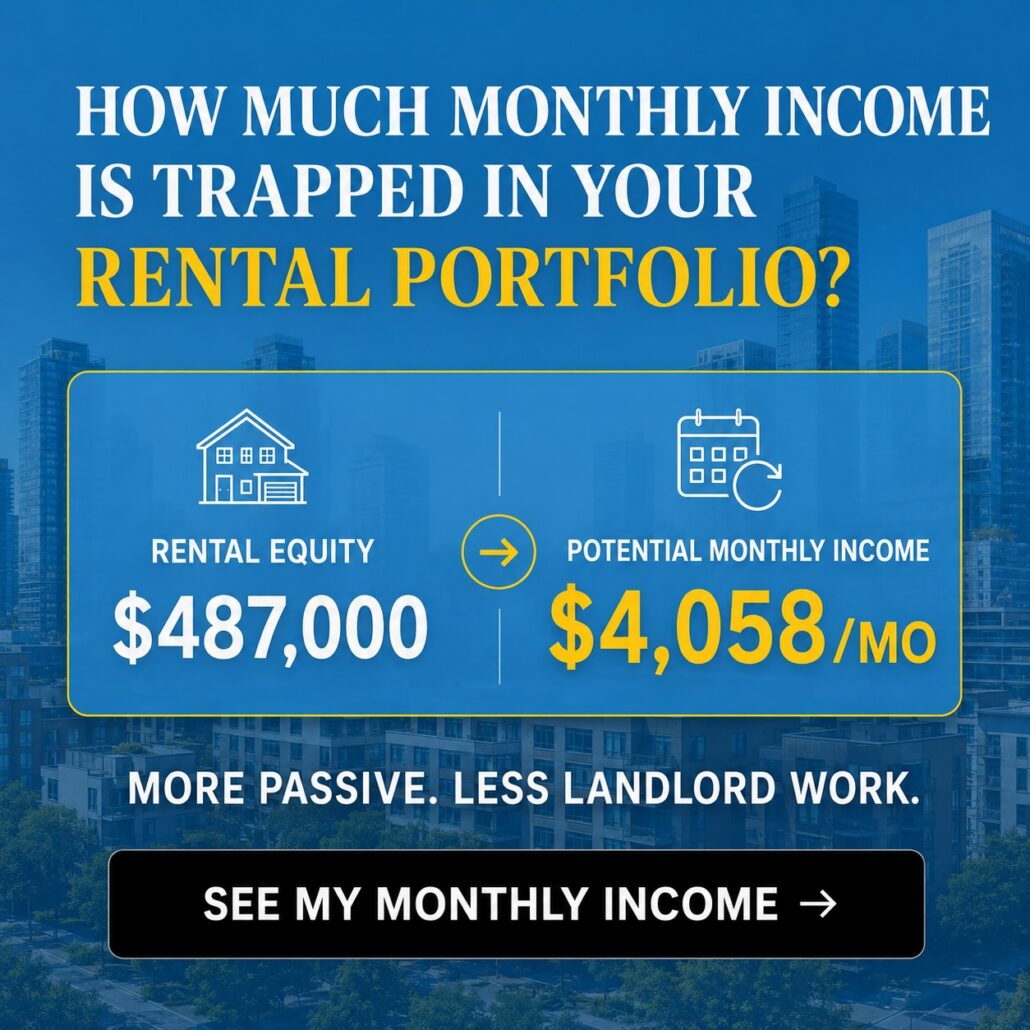
Before paying off the next mortgage—or automatically keeping a property because it’s already paid off—calculate three things:
The property’s annual free cash flow.
The current equity tied up in it.
The income that equity could reasonably produce elsewhere after taxes and transaction costs.
Safety isn’t just owning an asset without debt.
It’s having enough diversified income that one tenant, one roof, or one property cannot disrupt your retirement.
My $100,000 Was Here
In 2021 I put a hundred thousand dollars into a multifamily deal and never saw