A missed payment does not automatically mean investors have lost money.
It means the loan has entered a workout process.
That distinction matters because real estate debt is secured by an actual property. If the borrower cannot resolve the problem, the lender may ultimately take control of that property and use its value to recover the outstanding loan balance.
The outcome depends heavily on the collateral, the loan documents, the borrower, and the laws of the state where the property is located. But the broad sequence generally looks like this.
Step 1: The Borrower Misses a Payment
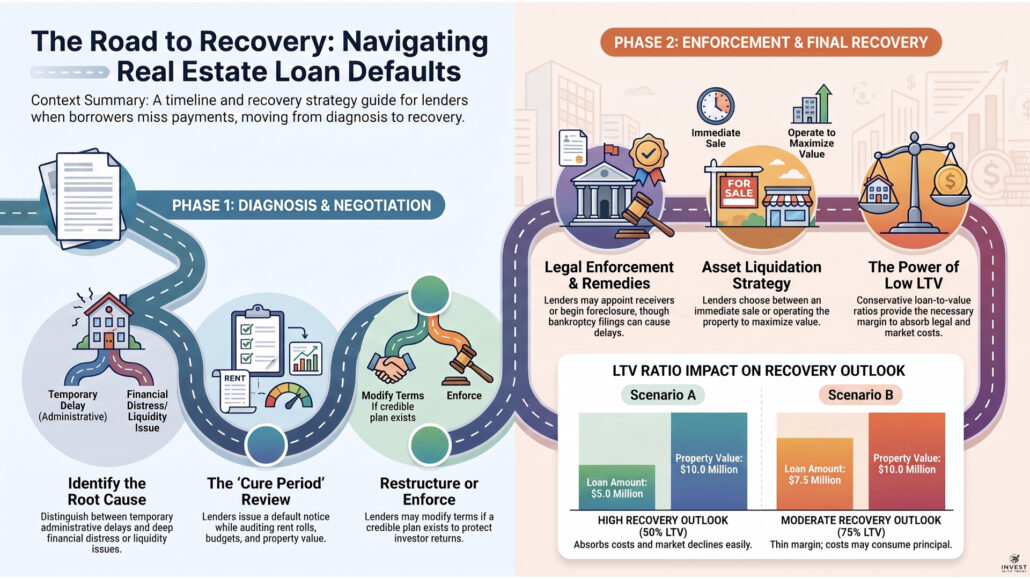
The first step is determining why.
Sometimes the problem is administrative. A payment was wired to the wrong account, a refinance was delayed, or proceeds from a property sale arrived later than expected.
Other times, the missed payment reveals a deeper problem: construction costs have exceeded the budget, lease-up is behind schedule, operating income has fallen, or the borrower has simply run out of liquidity.
The lender’s first job is not to foreclose. It is to understand what happened and determine whether the problem is temporary, fixable, and economically worth fixing.
Step 2: The Lender Issues a Notice of Default
The loan documents typically specify a cure period during which the borrower can bring the loan current.
At the same time, the lender begins a much more detailed review of the property and the borrower. That may include:
• Current rent rolls and operating statements
• Bank balances and cash-flow projections
• Unpaid taxes, insurance, or contractor invoices
• Construction progress and the remaining budget
• Updated property value
• The borrower’s other debts and sources of liquidity
• Any personal or completion guarantees supporting the loan
This is where active loan servicing becomes extremely important. A lender that has been collecting financial reports and monitoring the property should already understand the situation. A lender that discovers the problem only after payments stop is beginning the process from behind.
Step 3: The Lender Decides Whether to Restructure or Enforce
If the property remains viable and the borrower has a credible plan, a negotiated workout may produce a better outcome than immediate foreclosure.
The lender might extend the maturity date, establish a repayment schedule, require the borrower to contribute additional equity, or temporarily modify payment terms.
But a modification should not be confused with forgiveness.
A disciplined lender receives something meaningful in return: more collateral, additional guarantees, a principal paydown, tighter controls, or some other improvement in its position.
The question is not, “How can we avoid recognizing a default?”
The question is, “Which course of action gives investors the highest probability of recovering principal and earning an acceptable return?”
Step 4: If a Workout Fails, the Lender Begins Enforcement
If the borrower cannot or will not cure the default, the lender can exercise the remedies provided in the loan documents.
Depending on the circumstances, that may include collecting default interest, controlling property cash flow, enforcing guarantees, appointing a receiver, or beginning foreclosure.
This is where lien position becomes critical.
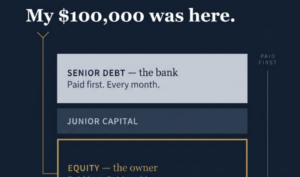
A first-lien lender generally has the senior claim against the property, ahead of the borrower’s equity and subordinate lenders. But being first in line does not guarantee full recovery. Property taxes, certain legal expenses, protective advances, and the costs of enforcement can still affect the amount recovered.
Foreclosure is also not instantaneous. The process varies considerably by state and by whether judicial foreclosure is required. A contested case can take much longer than an uncontested one.
Step 5: Bankruptcy May Interrupt the Process
A borrower may file for bankruptcy before foreclosure is completed.
A bankruptcy filing generally creates an automatic stay that temporarily stops foreclosure and most other collection activity. The lender may ask the bankruptcy court for relief from that stay, but the delay can increase legal costs and extend the recovery timeline.
Bankruptcy does not erase a properly perfected first lien. It does, however, move the dispute into a court-supervised process and can materially delay the lender’s ability to take control of the collateral.
Step 6: The Property Is Sold Or Taken Over
If foreclosure proceeds, the property may be sold at auction. In other cases, the lender may take title through a negotiated deed in lieu of foreclosure.
Once the lender controls the property, it has another decision to make:
Sell immediately, or operate and improve the property before selling?
An immediate sale may return capital sooner but produce a lower recovery. Holding the asset may create a better result, but it also exposes the fund to carrying costs, property-management responsibilities, and additional market risk.
This is one reason underwriting should be based on a realistic liquidation value, not the most optimistic appraisal available when the loan is originated.
Step 7: The Fund Calculates The Final Recovery
Suppose a lender makes a $5 million first-lien loan against a property worth $10 million.
If the borrower defaults and the property later sells for $8 million, there may still be enough value to repay the principal, accrued interest, and enforcement costs.
But if the original loan was $7.5 million against that same $10 million property, a 75% loan-to-value ratio, the margin for error is much smaller. A decline in value, selling costs, unpaid taxes, and legal expenses could quickly begin consuming lender principal.
That is why conservative leverage matters so much.
The best protection against default is not an aggressive foreclosure attorney. It is making a loan small enough relative to the property’s value that the lender has room to absorb mistakes, delays, and market declines.
Defaults will happen in almost any sufficiently large loan portfolio. The relevant questions are whether they were anticipated, whether the loans were conservatively underwritten, and whether the manager has the experience and discipline to recover capital when a borrower’s original plan no longer works.