One of the first investments I made as a limited partner was in an equity syndication for a multifamily complex. Since making the investment in 2021, we have yet to receive a single distribution.
The problem was that interest rates spiked in 2022, and ourselves and countless other limited partners got hurt in the process.
The building is slated to be sold this fall, and I expect to lose the entire $100,000 we invested.
When a real estate deal is performing well, debt and equity can both look attractive.
When it goes wrong, their position in the capital stack becomes everything.
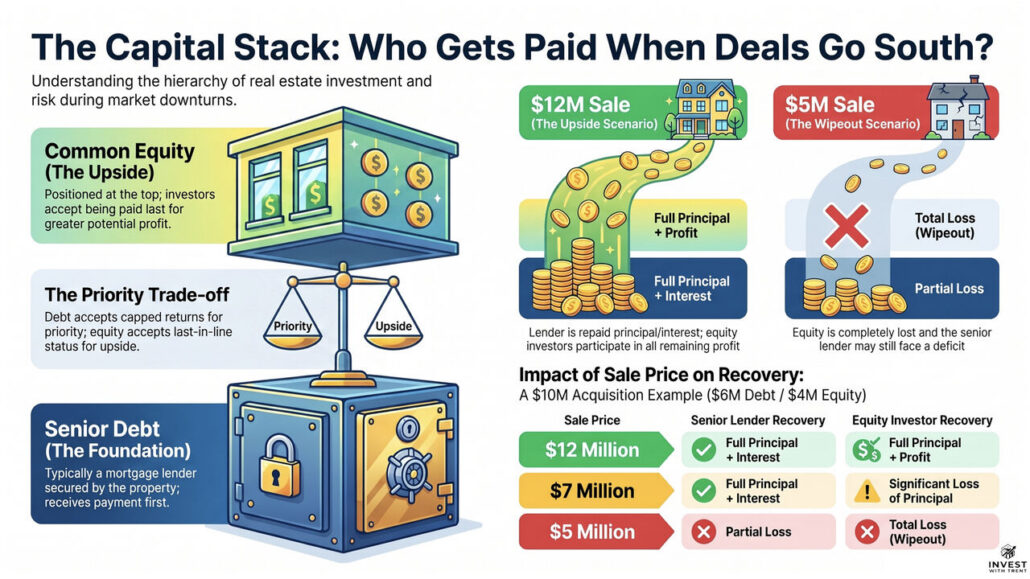
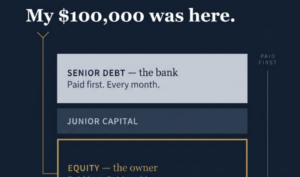
The capital stack is simply the order in which money gets paid.
At the bottom is **senior debt**—typically the mortgage lender. This position is usually secured by the property and gets paid first from operating income or sale proceeds.
Above that may be mezzanine debt or preferred equity, depending on the deal structure.
At the top is **common equity**—the investors who own the upside.
That sounds backward until you understand the tradeoff:
Debt investors usually accept a capped return in exchange for priority.
Equity investors accept being paid last in exchange for potentially greater upside.
Here’s a simplified example:
A property is purchased for $10 million.
• Senior lender: $6 million
• Equity investors: $4 million
If the property later sells for $12 million, the lender receives its principal and interest, and the equity investors participate in the remaining profit.
But if the property sells for only $7 million, the lender is still first in line. After selling costs and repayment of the loan, very little may remain for equity.
If the property sells for $5 million, the equity could be wiped out entirely—and the lender could still take a loss.
That’s why “the property is worth more than the loan” is one of the most important protections for a real estate lender.
But seniority does not eliminate risk.
A lender can still lose money if the loan-to-value ratio was too aggressive, the appraisal was wrong, the collateral deteriorated, or foreclosure costs consume the remaining value.
The real question isn’t simply:
“Is this debt or equity?”
It’s:
Where exactly am I in the capital stack?
What sits ahead of me?
How much value would have to disappear before my principal is impaired?
And what legal rights do I have when the deal stops performing?
When things are going well, everyone talks about returns.
When things go wrong, the capital stack decides who gets their money back.
Want to learn more about investing in real estate, private credit? Follow me here.