If you own several rentals and have capital available, you face a real choice:
Buy another property—or invest in a private real estate debt fund?
There is no universally correct answer. It depends on what you want your money—and your time—to do.
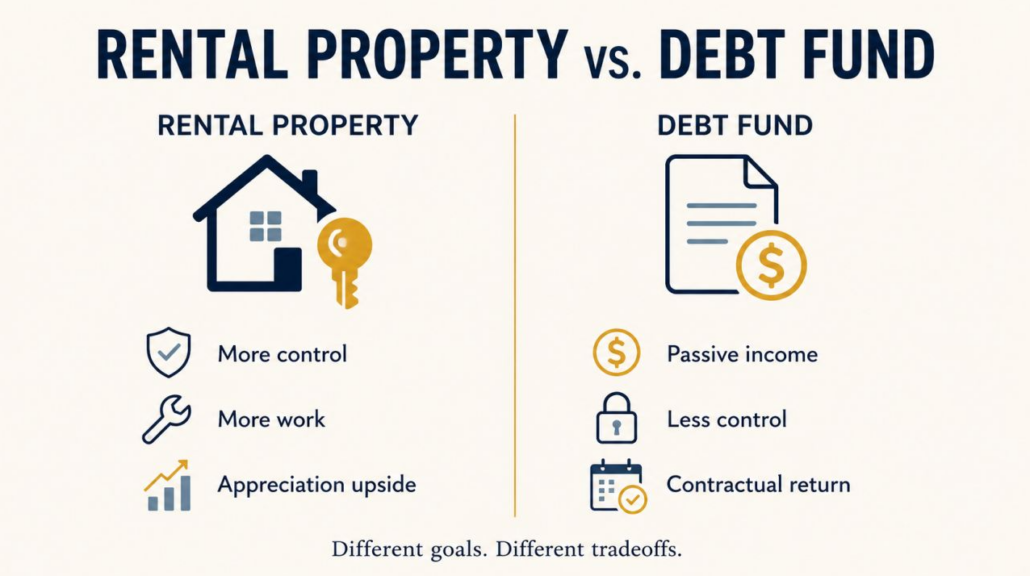
Another rental offers:
• Control over the property, financing and business plan
• Appreciation and rent-growth potential
• Possible depreciation, leverage and 1031-exchange benefits
• The ability to improve returns through renovations or better management
But control comes with responsibility.
You are exposed to vacancies, repairs, insurance increases, property taxes, tenant problems and major capital expenses. Even with professional management, you still manage the manager.
Rental income can also look better than it is when owners ignore reserves for roofs, HVAC systems, turnover and their own time.
A debt fund offers something different:
• Diversification across multiple loans
• Professional sourcing, underwriting and servicing
• Contractual interest payments that may produce more predictable income
• Priority over the property owner when loans are secured by first-position liens
The tradeoff is less control.
You depend on the manager’s underwriting, valuations and ability to handle defaults. You typically surrender most appreciation, your capital may be locked up, fees reduce returns and distributions are never guaranteed.
Taxes also matter. Rental owners may benefit from depreciation and 1031 exchanges. Debt-fund income is often taxed less favorably, depending on the structure and the investor.
The simplest comparison is this:
Buy another rental if you value control, accept the operational work and believe appreciation and tax benefits justify the concentration.
Consider a debt fund if you value income, diversification and freedom from property-level operations more than unlimited upside.
But compare them honestly.
Do not compare a fund’s net distribution with a rental’s gross rent.
For the rental, subtract all expenses, realistic capital reserves and the value of your time. Then divide the remaining annual cash flow by your current equity—not your original investment.
For the fund, examine the net return after fees, collateral, lien position, leverage, liquidity restrictions and the manager’s loss history.
The real question is not:
“Which investment advertises the highest return?”
It is:
“Which combination of income, risk, taxes, control and effort fits the life I want now?”
For many experienced landlords, the rentals were exactly what helped them build wealth.
That does not mean buying more is the best way to turn that wealth into income.