A real estate private credit fund targeting returns above 15% is not automatically a bad investment.
But it is almost certainly not earning those returns from conservative, unleveraged first mortgages on stabilized properties.
The extra return has to come from somewhere.
Here are the most likely sources.
1. The advertised return may be gross
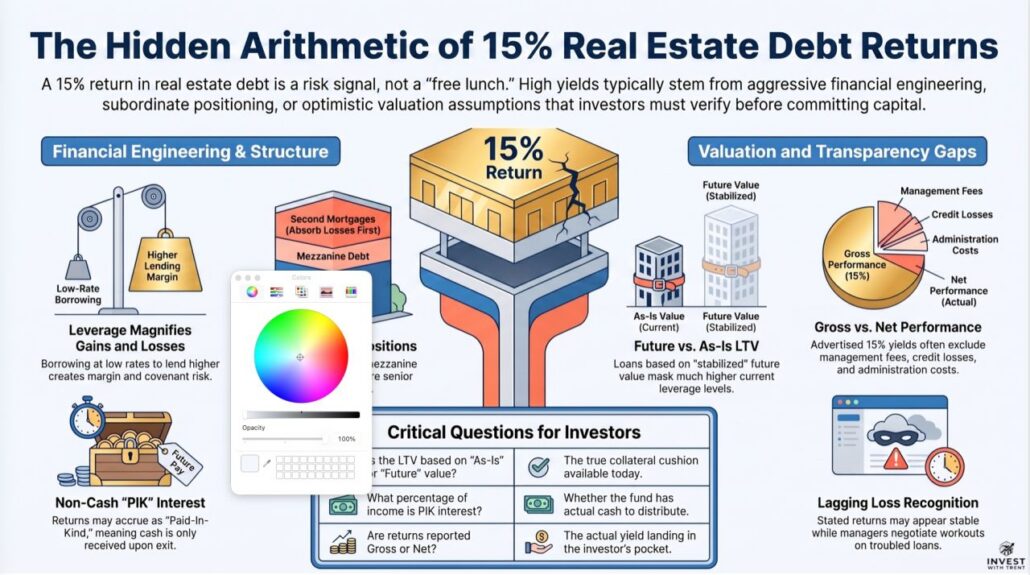
A fund may originate loans yielding 15%, then deduct management fees, incentive compensation, legal expenses, administration costs and credit losses.
Investors may receive considerably less.
Always ask whether the number is gross or net—and whether it represents a target, historical performance or current cash distributions.
2. The fund may be using leverage
The fund borrows at one rate and lends at a higher one, increasing the return on investor equity.
That works while loans perform.
But leverage also magnifies losses, creates margin or covenant risk and may force the manager to sell assets or suspend distributions during a downturn.
3. The loans may sit below first position
Second mortgages, mezzanine debt and preferred equity can produce higher yields because they absorb losses before the senior lender does.
The marketing may call the investment “real estate secured,” while saying much less about where it actually sits in the capital stack.
4. The collateral may be highly transitional
Construction projects, vacant buildings, heavy renovations and development loans can justify higher rates.
They also depend on budgets, timelines, permits, leasing assumptions and future financing that may not materialize.
5. The LTV may be based on future value
A loan can appear to be 60% LTV when measured against the property’s projected value after renovation.
Measured against today’s as-is value—or liquidation value—the real leverage may be much higher.
6. Part of the return may not be cash
Some loans accrue interest rather than paying it currently. This is often called paid-in-kind, or PIK, interest.
The fund records income today, but receives the cash only when the borrower refinances or sells.
If the exit fails, some of that reported return may never be collected.
7. Fees may be doing more work than interest
Origination fees, extension fees, exit fees, default interest and prepayment penalties can increase returns.
Those fees are legitimate—but investors should understand whether the fund’s return depends on healthy borrowers paying interest or troubled borrowers repeatedly extending expensive loans.
8. Losses may not have appeared yet
Private loans are not priced every day like public bonds.
A manager may continue carrying a troubled loan near its original value while negotiating an extension or workout. The stated return can look stable until the loss is finally recognized.
The conclusion is not that 15% returns are impossible.
A 15% return in real estate debt is a risk signal, not a “free lunch.” High yields typically stem from aggressive financial engineering, subordinate positioning, or optimistic valuation assumptions that investors must verify before committing capital.