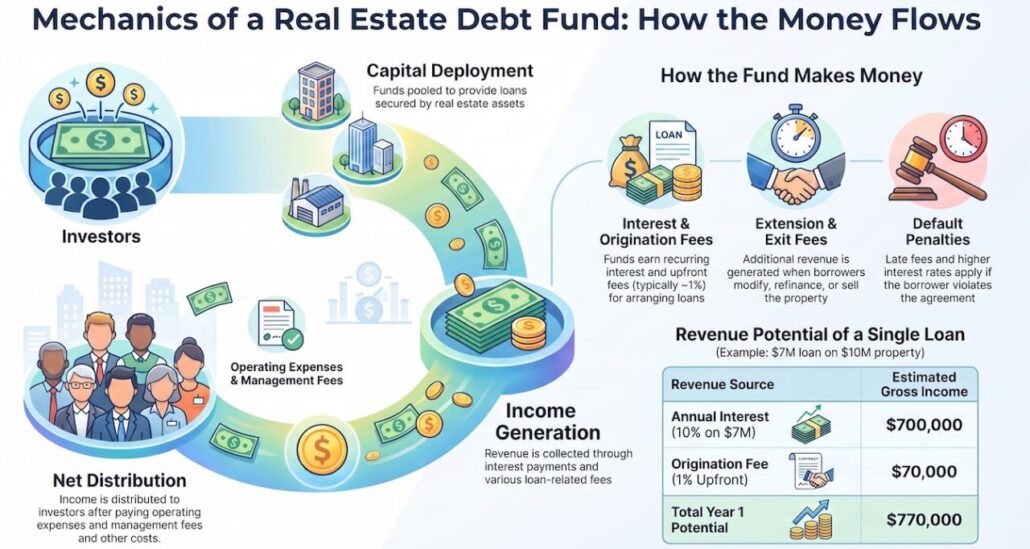
𝗪𝗵𝗮𝘁 𝗶𝘀 𝗮 𝗿𝗲𝗮𝗹 𝗲𝘀𝘁𝗮𝘁𝗲 𝗱𝗲𝗯𝘁 𝗳𝘂𝗻𝗱—a𝗻𝗱 𝗵𝗼𝘄 𝗱𝗼𝗲𝘀 𝗶𝘁 𝗮𝗰𝘁𝘂𝗮𝗹𝗹𝘆 𝗺𝗮𝗸𝗲 𝗺𝗼𝗻𝗲𝘆?
A real estate debt fund pools money from investors and uses it to make loans secured by real estate.
The fund is not buying the apartment building, warehouse, or shopping center.
It is lending money to the person who is.
Here’s a simple example:
A developer wants to buy and renovate a $10 million property. A bank may not want the loan because the building needs work, the borrower needs to close quickly, or the deal falls outside the bank’s lending rules.
A debt fund might lend $7 million against the property.
The borrower gets the capital needed to complete the deal. The fund receives a mortgage or other security interest in the real estate.
Then the fund earns money in four main ways:
1. Interest
If the fund lends $7 million at 10%, the loan can generate roughly $700,000 per year in gross interest while the full balance is outstanding.
2. Origination fees
The fund may charge an upfront fee for arranging and funding the loan. A 1% fee on $7 million equals $70,000.
3. Extension and exit fees
If the borrower needs more time, modifies the loan, refinances, or sells the property, additional fees may apply.
4. Default interest and late fees
A borrower who violates the loan agreement may owe a higher rate. But this is not “bonus income.” Defaults bring legal costs, delays, and the possibility of loss.
The fund uses its income to pay operating expenses, servicing costs, management fees, and—if it uses leverage—the interest owed to its own lenders.
What remains after expenses and loan losses may be distributed to investors.
That is the basic model:
Investor capital → property loans → interest and fees → investor distributions.
But a high lending rate does not automatically create a good investment.
A fund can charge 12% and still lose money if it lends too much, accepts weak collateral, uses excessive leverage, or cannot recover its principal after a default.
Before investing, I would want clear answers to five questions:
What secures each loan?
How much borrower equity sits beneath it?
How much leverage does the fund use?
What happens when a borrower defaults?
What has the manager actually recovered on troubled loans?
A real estate debt fund makes money by collecting interest and fees.
Its investors make money only when the underwriting, collateral, and recovery process are strong enough to protect the principal.