Most people hear “hard money” and think last resort. Borrower in trouble, lender circling.
That’s not what this is.
A bridge loan is a tool. A borrower buys an apartment building that’s 60% occupied. The bank says no — not enough current income. So he takes short-term financing secured by the property, fixes the units, fills them, stabilizes the cash flow, then refinances into cheap bank debt.
The bridge was never meant to be permanent. It was meant to get him from A to B.
He pays 10-12% for that. Not because he’s desperate. Because he can close in 15 days instead of 90, and that speed is worth more to him than the rate costs him.
That premium isn’t one thing. It’s stacked: speed, complexity, short duration, and the legal machinery of potentially taking control of the asset. The lender is getting paid for all of it.
The part that actually matters is underwriting. There’s a real difference between a loan that finances a specific business plan with a believable exit, and a loan that finances a stall — praying rates fall or values rise before the money runs out. Same asset class. Same instrument. Completely different outcome.
One question separates them: is this a temporary problem with a clear solution, or a permanent problem with a temporary loan?
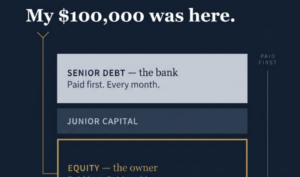
I invest my family’s money in a fund built on the first kind. Targeting approximately 10% net, monthly distributions, first-lien only.