I want to tell you something most people in my position would never put on their website.
I lost money on a real estate deal. Not a little — enough to matter. It was a multifamily syndication I invested in as a limited partner. I never received a single distribution. When interest rates spiked in 2022, the asset’s cash flow (and market value), fell off a cliff.
Here’s what that taught me: when you’re an equity investor and things go wrong, you’re at the back of the line. The lender gets paid first. The preferred equity gets paid next. By the time it gets to you, there may be nothing left. I learned that the hard way.
That loss changed how I invest.
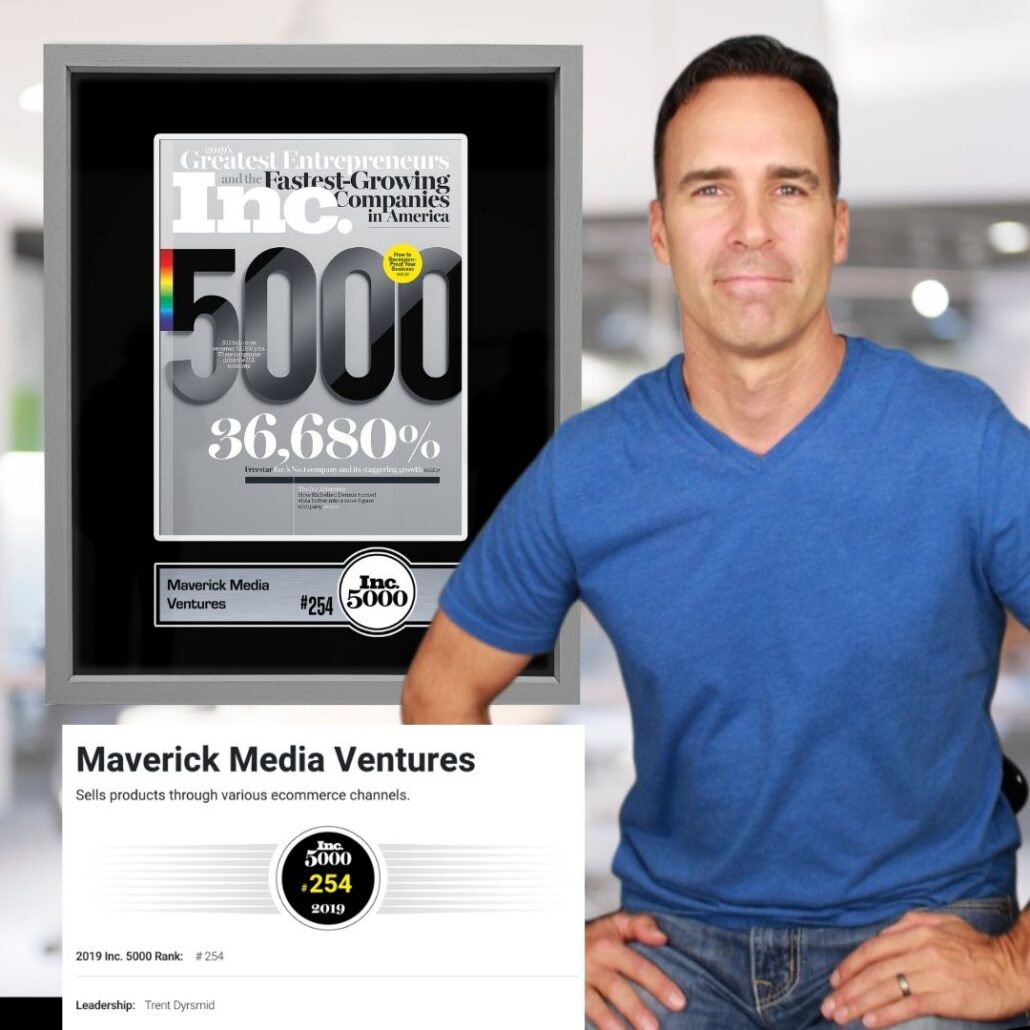
I spent most of my adult life building & selling companies. One of them made the Inc. 5000 list; ranked #254 and #622 in 2019 and 2020.
For most of that time, I assumed the business was the plan. Build it, sell it, retire on the proceeds. It’s what I’d read about in magazines, so naturally, I thought I’d just follow the same path.
What I didn’t see clearly enough was how fragile that plan actually was.
A business is a single concentrated bet. If the market shifts, if a key person leaves, if the timing is wrong — the exit you spent a decade working toward can disappear faster than you expect. I watched it happen to friends, and I felt versions of it myself.
In 2019, my business was pumping out cash and we needed to move out of our small warehouse into a much larger one, so rather than sign another lease, I decided instead to buy my own building.
The building I purchased was a 15,000 square foot light industrial building in Garden City, Idaho for $1.3M.
When we bought the building, it was very poorly managed and in really rough shape; which is why I could afford to buy it!
My wife and I worked diligently to fix what needed fixing, raise the rents to market rates, deal with tenant turnover, and all the other things that came along with stabilizing the building.
Two years later we accepted an unsolicited cash offer for $2M.
I thought I’d hit a home run!
But more importantly — I realized that making money by investing in real estate took a fraction of the time and mental energy my businesses demanded.
That gap got my attention.
Over the next five years, I invested as a limited partner in 4 different mobile home communities with an operator I knew and trusted.
Then, in an effort to diversify our investments further, my wife and I decided to invest $100,000 in a multifamily syndication with an operator who had plenty of experience. We made that investment in the summer of 2021, not too long after we’d sold our industrial building.
Thanks to the massive spike in interest rates in the spring of 2022, the multifamily syndication investment has never paid a single distribution and will likely be a total loss.
That loss was the turning point in how I think investing.
When equity deals go wrong, you find out exactly where you sit in the capital stack — and it’s not at the front. The lender gets paid first. The preferred equity gets paid next. By the time it reaches you, there may be nothing left.
With an equity deal, you get to invest and “hope” that the operator executes their business plan to perfection.
If they do, you win (like our mobile home park investments).
If they don’t, you lose BIG (like our multi-family deal)
Debt is different.
When you’re the lender, secured by real collateral in first position, as long as you have a conservative LTV, a deal has to go seriously wrong before your principal is at risk.
You get paid before anyone else does. That’s not a small distinction — it’s the entire difference between sleeping well and not.
That realization led me to real estate debt funds. And once I understood how they worked, I couldn’t find a reason to ignore them.
The funds I’m currently invested in target 10% to 12% net returns to limited partners, paid monthly.
I manage a fund-of-funds that invests in real estate debt funds run by vetted lead sponsors.
My job is to find the best operators, do the due diligence most investors don’t have time to do, and invest alongside you — on the same terms I negotiated for myself.
Twenty years of building process-driven companies taught me one thing above everything else: systems win.
That’s exactly how I approach fund due diligence.
Every sponsor goes through the same rigorous process. Same questions. Same documentation standards. Same red flag checklist. No shortcuts.
If a fund can’t pass that process, my money doesn’t go in.
And neither does yours.
I work with accredited investors — people who have built real wealth through a business, a career, or real estate, and are looking for a smarter way to put that capital to work without adding another management burden to their life.
If you’re not yet an accredited investor, this probably isn’t the right fit. The minimum investment is $100,000, and the structures I work with are designed for people with serious capital and a long-term orientation.
If that’s you, and you want to see exactly what I’m investing in and why — including the full due diligence behind every fund — I’d like to talk.
Minimum $100K. Accredited investors only.